What is Structural Integration (SI)?
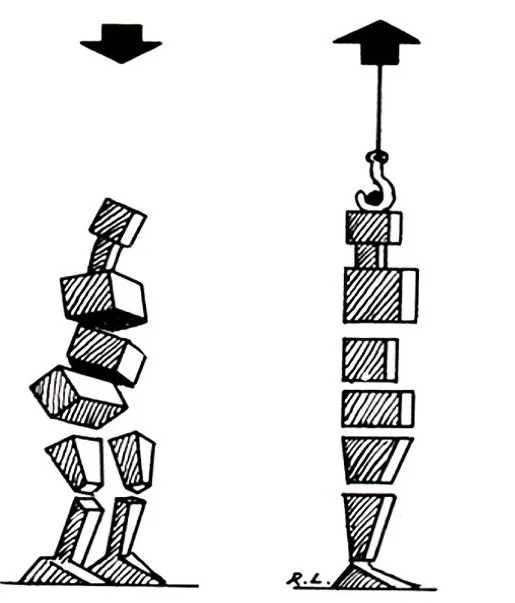
Structural Integration (SI) is a comprehensive, holistic form of hands-on bodywork developed by Dr. Ida P. Rolf that works with the body's fascial network — the web of connective tissue that contains, surrounds, and connects every part of us — to explore balance, ease, and alignment in relation to gravity.
Our bodies are shaped by everything we've lived: our movement habits and histories, injuries and surgeries, posture and patterns, even our thoughts and daily rhythms. Over time, these experiences are held in the fascia, creating compensations and tensions that affect how we move, feel, and function. Structural Integration offers a systematic way to explore and reorganize these whole-body patterns, addressing root causes rather than isolated symptoms.
Rather than targeting a specific area of pain or dysfunction, SI honors the principle of holism — the understanding that the body is more than the sum of its parts, and that lasting change comes from working with the whole system. A painful neck, a tight hip, a sense of chronic fatigue — these are often expressions of broader patterns held throughout the body. By restoring balance to the whole, relief in the parts tends to follow naturally.
SI is a collaborative process. Client and practitioner work together as equal partners, using visual, movement, and palpatory assessments to guide each session. The work may be done on the table, seated, or standing — and clients are encouraged to move, feel, and participate actively rather than passively receive. This engagement is central to how change takes root.
The work is most fully experienced as a series of 10 sessions each with a specific focus that builds on the last, gradually unwinding old patterns and inviting new ways of organizing and moving. Single sessions can also offer meaningful benefit.
SI may be a good fit if you're looking to:
Explore a deeper relationship with how you move and live
Enhance athletic performance
Reduce or resolve chronic pain and tension
Improve posture, alignment, or body awareness
Recover from injury or repetitive strain
Feel more grounded, centered, and at home in your body

The Ten Series in 3 parts
Sleeve Sessions
Session 1 — Open the breath. A free and open breath prepares the body for the demands of the upcoming changes. A full breath provides support for the chest, shoulders, and neck.
Session 2 — Find the feet. Opening the breath changes the physical demands on the feet, so we create flexibility and adaptability there so that the whole body can feel supported.
Session 3 — Lengthen the sides, balancing front and back. Now we open up the sides of the body and differentiate soft tissue of the pelvis from that of the ribs to allow the pelvis more movement options.
Core Sessions (deep tissues influencing spine)
Session 4 — Find support for and access "the core" from the bottom. The core begins from the base of the pelvis up through the roof of the mouth. We start this session by finding support through the ankles up along the inner leg before accessing the core.
Session 5 — Access the core from the front. We focus on the deep tissues dealing with the front of the spine and core space to establish flexibility in the low back.
Session 6 — Access the core from the back. We address the deep tissues of the back of the spine and core space to establish flexibility in the low and upper back.
Session 7 — Access the core from the top. By working in, on, and around the head and neck, we balance the head and neck atop the flexible spine.
Integration Sessions
Session 8 — Integrate the upper/lower body. Depending on the needs that present themselves, we work on segments in the upper or lower body. Integration sessions help reprogram movements and make changes last.
Session 9 — Integrate the upper/lower body. Changes in the other part of the body are reviewed in light of the changes of the previous session.
Session 10 — Integrate the entire body. We coordinate soft tissue movement across multiple joints so that movement can be as unfettered and free as possible.